


What Is Garbage Bin Caster
A garbage bin caster is a small wheel or caster that is attached to the bottom of a garbage bin or trash can. It allows the bin to be easily moved or rolled, making it convenient for garbage collection or transportation. The caster usually has a swivel mechanism that enables the bin to be maneuvered in any direction.
Advantages of Garbage Bin Caster
Easy Maneuverability
Garbage bin casters allow for smooth and effortless movement of the bin, making it easy to transport and position in different locations. This is particularly beneficial in areas where the bin needs to be regularly moved, such as in a commercial or industrial setting.
Increased Productivity
With garbage bin casters, the process of emptying and cleaning bins becomes quicker and more efficient. Workers can easily move the bin to the desired location without straining themselves, saving time and effort.
Reduced Risk Of Injuries
Garbage bins can be heavy and difficult to lift, which can result in injuries for workers. By using casters, the risk of strain or back injuries is significantly reduced, as the bin can be easily rolled instead of lifted.
Durability
High-quality garbage bin casters are designed to withstand heavy loads and frequent use. They are typically made of durable materials such as steel or heavy-duty plastic, ensuring that they can withstand the wear and tear of daily use.
Improved Hygiene
By allowing for easy movement and positioning, garbage bin casters help maintain a clean and hygienic environment. Bins can be easily moved away from sensitive areas or cleaned thoroughly without much effort.
Improved Aesthetics
Some garbage bin casters are designed to be aesthetically pleasing, featuring sleek and modern designs. This can help improve the overall appearance of the bin and its surroundings, especially in public areas.


Why Choose Us
Rich Experience
Our company has many years of production work experience. The concept of customer-oriented and win-win cooperation makes the company more mature and stronger.
Advanced Equipment
A machine, tool or instrument designed with advanced technology and functionality to perform highly specific tasks with greater precision, efficiency and reliability.
High Quality
Our products are manufactured or executed to very high standards, using the finest materials and manufacturing processes.
Competitive Price
We have professional sourcing team and cost accounting team, stive to reduce cost and profit and provide you a good price.
Sustainable Development
Establish a good reputation and brand value in the industry, and promote the sustainable, stable, rapid and healthy development of the enterprise.
One-stop Solution
With rich experience and one-to-one service,we can help you choose products and answer technical questions.
Are Garbage Bin Casters Suitable For All Types Of Garbage Bins
Garbage bin casters are not universally suitable for all types of garbage bins due to differences in bin design, weight capacity, intended use, and environmental factors. When choosing casters for a garbage bin, several factors need to be considered:
Bin Weight and Size: The weight and dimensions of the garbage bin will dictate the type and size of casters needed. Heavier bins require casters with higher load capacities, and larger bins may need larger wheels for better maneuverability.
Material Compatibility: The material of the garbage bin's bottom surface must be compatible with the caster wheels. Hard, smooth surfaces like plastic or metal are ideal for most wheel materials. If the bin has a softer or irregular surface, wheels with a softer tread, such as rubber or polyurethane, might be necessary to prevent damage.
Environment: The environment in which the bin will be used also plays a role in caster selection. For indoor use on flat surfaces, standard casters may suffice. However, outdoor use, especially on rough terrain, may require casters with enhanced durability and shock absorption.
Mobility Requirements: If the bin needs to be moved frequently or maneuvered in tight spaces, swivel casters may be more appropriate. For straight-line travel or when stability is paramount, rigid casters might be preferred.
Locking Mechanisms: Depending on the application, casters with locking mechanisms may be necessary to prevent accidental movement. This is particularly important in areas where bins are left unattended or in public spaces.
Maintenance: Casters require regular maintenance to ensure they continue to function properly. Bins that are subject to frequent movement or exposure to harsh conditions may need more durable or easily maintainable casters.
Do Garbage Bin Casters Have Locking Mechanisms To Prevent Movement
Yes, many garbage bin casters come equipped with locking mechanisms designed to secure the bin in place when necessary, preventing unwanted movement. The type of locking mechanism may vary among different models and manufacturers, but common options include:
Swivel Lock: This type of lock engages the swivel feature of the caster, effectively turning it into a rigid caster. The lock is typically activated by stepping on a pedal or pressing down on a lever, which applies pressure to a mechanism inside the caster that locks the swivel joint.
Brake Lever: Some casters have a brake lever that, when engaged, applies friction to the wheel itself to slow it down or stop it from rolling. This type of lock is often used on lighter-duty carts and bins where full immobilization isn't required.
Top-Lock Lever: Found on some heavy-duty garbage bin casters, this mechanism locks the entire caster assembly in place, preventing both swiveling and rolling. It is usually located at the top of the caster and can be engaged manually.
Paddle Lock: This type of lock is activated by pushing a flat piece (the paddle) down onto the ground, which applies pressure to the internal mechanism and locks the caster. To unlock, the paddle is lifted upwards.
Rotating Bracket: On some caster systems, the wheels are mounted on a bracket that can rotate; engaging the lock stops the rotation of this bracket, thereby securing the wheel.
How Does a Garbage Bin Caster Work
A garbage bin caster consists of a wheel mounted on a fork or frame that attaches to the bottom of a garbage bin. The wheel allows the bin to be rolled or moved from one location to another with relative ease. The caster mechanism works based on principles of physics involving force, friction, and motion.
Here's a Detailed Explanation Of How a Garbage Bin Caster Operates:
Wheel Design: The wheel is the key component that enables movement. It reduces friction between the garbage bin and the floor, allowing for smoother rolling. Wheels can be made from various materials, such as plastic (for light-duty applications), rubber, or polyurethane (for durability and resistance to chemicals), and sometimes include a metal core for additional strength.
Swivel VS. Rigid: Casters can be swivel or rigid. Swivel casters allow the wheel to rotate 360 degrees, making it easier to maneuver the bin in tight spaces. Rigid casters move only forward and backward, which can be preferable for straight-line travel or when stability is needed.
Frame And Fork: The frame or fork connects the wheel to the garbage bin. It provides the structural support needed to hold the weight of the bin and its contents. The fork typically slides under the bin and is secured with a bolt or other fastening method.
Mounting Mechanism: The caster is attached to the bin through a mounting mechanism. This can be a threaded stem that screws into a pre-existing hole in the bin, a plate that clamps around the lip of the bin, or a bracket that wraps around the base of the bin and is secured with screws or bolts.
Movement: When force is applied to the garbage bin, such as pushing or pulling, the wheel rolls along the floor. The force must overcome static friction to start the movement. Once in motion, kinetic friction takes over, which is usually lower than static friction, allowing for easier rolling.
Direction Control: For swivel casters, direction control is achieved through the rotation of the wheel. The swivel action allows the caster to turn and change direction without having to lift and reposition the bin. Rigid casters follow the path determined by the angle of force applied.
Braking/Locking: Many garbage bin casters have a locking mechanism that can be engaged to prevent movement. This is useful when the bin needs to be stationary during collection or disposal tasks. The lock can be a pedal, lever, or paddle that, when activated, physically restricts the wheel's ability to rotate or moves an internal component that prevents the wheel from turning.
Are Garbage Bin Casters Compatible With Recycling Bins
Garbage bin casters are indeed compatible with recycling bins, and they are commonly used to make recycling bins more mobile and easy to maneuver. Recycling bins vary in size, shape, and weight, so the selection of casters should match the specific requirements of the bin.
When Choosing Casters For Recycling Bins, Consider The Following Factors:
Weight Capacity: Select casters that can support the weight of the recycling bin when it is full. This ensures safe handling and prevents the caster from failing under the load.
Material: Choose wheels made from materials that are suitable for the environment in which the recycling bin will be used. For instance, hard rubber or polyurethane wheels are versatile and can be used indoors and outdoors.
Terrain: Consider the surface over which the recycling bin will be moved. Smooth indoor surfaces may require different casters than rough outdoor terrains or areas with debris.
Maneuverability: If the recycling bin needs to be moved frequently or in tight spaces, swivel casters can provide better maneuverability. Rigid casters may be more appropriate for straight-line travel or where stability is more important.
Wheel Size: Larger wheels can roll over obstacles more easily and are better for uneven surfaces. Smaller wheels are often sufficient for flat, smooth floors.
Brake System: Some casters come with brake systems that can lock the wheels to keep the bin stationary when necessary, which is useful in recycling centers or areas where the bin needs to remain in place.
Mounting: Ensure that the casters are compatible with the type of mounting system used on the recycling bin. Some bins have pre-installed fittings for casters, while others may require adapters or brackets.
What Are The Materials Used In Garbage Bin Casters

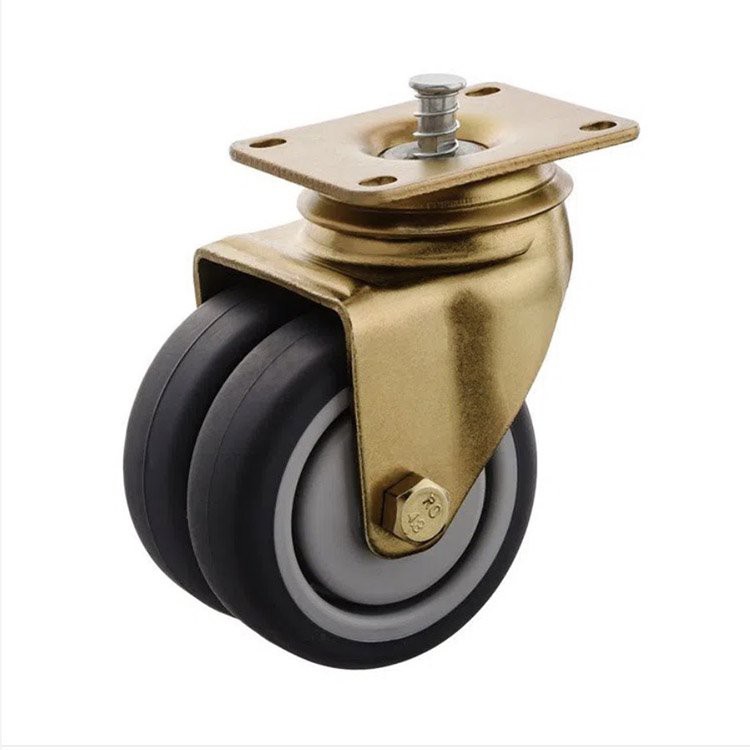


Garbage bin casters are constructed using a variety of materials, each chosen for its durability, suitability for different environments, and ability to support the weight of the bin and its contents. The main components of a caster and the materials commonly used for them are as follows:
Wheels
- Polyurethane: Often used for general purpose because it combines durability with the ability to roll smoothly over a variety of surfaces.
- Rubber: Provides good traction and is quieter on hard surfaces. Rubber wheels are also less likely to scratch delicate floors.
- Phenolic: Known for its high wear resistance and chemical resistance, phenolic wheels are suitable for industrial environments.
- Nylon: Lightweight and resistant to abrasion, nylon wheels are often used in cleanroom environments or where corrosive substances are present.
- Steel: Very durable and capable of handling heavy loads, steel wheels are commonly used in industrial settings. They are less forgiving on rough surfaces, however.
Frame and Fork
- Stainless Steel: Resistant to rust and corrosion, stainless steel is used in environments where hygiene is important, such as in food service or medical facilities.
- Carbon Steel: A strong and cost-effective option for many applications, carbon steel is often used for casters that need to withstand heavy loads.
- Plastic: Lighter than metal frames, plastic is used for casters that need to be portable or where the weight of the caster is a concern.
- Brake/Locking Mechanisms:
- Metal: Typically constructed from steel or another sturdy alloy, these components are designed for reliability and longevity.
- Plastic: Sometimes used for locking mechanisms, especially in applications where weight is a consideration.
Mounting Hardware
- Bolts and Screws: Usually made from steel for strength and durability.
- Plastic Nuts and Washers: Can be used to prevent corrosion in certain environments.
- Seals and Bushings:
A type of engineering plastic known for its strength, low friction, and dimensional stability. - Delrin (Acetal):
- Nylon: Often used for seals and bushings due to its wear resistance and self-lubricating properties.
The weight capacity of garbage bin casters varies depending on several factors, including the size and type of the wheel, the strength of the materials used, the design of the caster assembly, and the intended application. Typically, casters are rated in terms of their load-carrying capacity, which can range from just a few hundred pounds to several thousand pounds.
Light-duty casters might have a load capacity of around 100 to 350 pounds per caster, suitable for small residential or office waste bins. Medium-duty casters can carry upwards of 500 to 800 pounds each, which would be appropriate for commercial settings with moderate waste volumes. Heavy-duty casters are designed for industrial applications and can support weights ranging from 1,000 pounds all the way up to 4,000 pounds or more per caster.
When selecting garbage bin casters, it's essential to consider not only the maximum weight capacity but also the dynamic load rating, which refers to the weight the caster can support during movement. The dynamic load rating is typically lower than the static load rating (the weight the caster can support without movement) because movement introduces additional stresses on the components.
How Do Garbage Bin Casters Handle Rough Or Abrasive Surfaces
Garbage bin casters designed to handle rough or abrasive surfaces typically incorporate several features to enhance durability, traction, and performance. Here's how they manage such challenging conditions:
Tough Wheel Materials: Wheels made from materials like polyurethane, phenolic, or reinforced rubber are used because they offer greater resistance to cuts, gouges, and abrasions compared to softer materials like standard rubber. Phenolic wheels, in particular, are known for their high abrasion resistance and are often selected for the harshest environments.
Deep Tread Patterns: Wheels with deeper tread patterns provide better grip and help to navigate through debris, gravel, or uneven terrain. The increased surface area of the tread helps to distribute the weight of the garbage bin more evenly, reducing the risk of getting stuck or damaging the wheel.
Pneumatic Tires: For extreme roughness, pneumatic tires filled with air can absorb shocks and adapt to the surface irregularities better than solid tires. The air inside acts as a cushion, providing a smoother ride and reducing the impact on both the caster and the surface.
Wide Wheels: Wider wheels have a larger footprint, which can improve stability and reduce sinking or tipping on soft or uneven ground. They also distribute the weight over a broader area, reducing the pressure on any single point and minimizing the chance of punctures or damage.
Bronze or Dust Shields: Some casters are equipped with bronze sleeves or shields around the wheel bearings. These shields protect the bearings from dust, dirt, and debris that could cause premature wear or failure in abrasive environments.
Sealed Bearings: Sealed bearings prevent contaminants from entering and degrading the bearing performance. This is crucial for maintaining smooth operation and extending the life of the caster on dirty or dusty surfaces.
Sturdy Frame Construction: The frame and fork of the caster are often made from heavy-duty materials like carbon steel or stainless steel. These materials can withstand the stresses and strains associated with traversing rough terrain without bending or breaking.
Swivel Design: Swivel casters allow for easier maneuverability in tight spaces and around obstacles. However, on very rough surfaces, rigid casters might be preferred for their added stability and reduced likelihood of becoming caught on debris.
Adjustable Wheel Height: Some casters come with adjustable heights, allowing the user to set the wheel at a height that provides the best clearance and reduces the risk of dragging on the ground.
Garbage bin casters are engineered to be highly durable to withstand the rigors of regular use, heavy loads, and various environmental conditions. The durability of garbage bin casters is influenced by several factors, including the choice of material for the wheels, frame, and hardware, as well as the design features that accommodate different operating conditions.
Materials used for wheels, such as polyurethane, rubber, phenolic, and steel, are selected for their resilience against abrasion, impacts, and chemical exposure. Polyurethane wheels, for example, offer a balance between durability, load capacity, and rolling resistance, making them suitable for a wide range of environments.
Rubber wheels provide good traction and are less likely to damage indoor flooring but may wear faster in outdoor settings or where there is grit and debris. Phenolic wheels are exceptionally durable and resistant to heat and chemicals, making them ideal for industrial applications. Steel wheels are extremely robust and can handle heavy loads but may not be as forgiving on rough surfaces as other materials.
The frame and fork of the caster are typically made from carbon steel or stainless steel. Carbon steel is strong and cost-effective, while stainless steel is chosen for its resistance to rust and corrosion, particularly important in sanitary or corrosive environments.
Durability is also enhanced by the quality of the mounting hardware, such as bolts and screws, which must be robust enough to securely attach the caster to the bin and withstand repetitive motion and heavy loads.
How Do Select The Right Garbage Bin Caster
To select the right garbage bin caster, consider the following factors:
Load Capacity: Determine the weight of your garbage bin when it is full, and choose a caster with a load capacity that exceeds this weight. It is important to have a safety margin to ensure the caster can handle the load without breaking or causing accidents.
Wheel Material: Select a wheel material suitable for your specific needs. Common options include rubber, polyurethane, and nylon. Rubber wheels provide good grip and are suitable for indoor use, while polyurethane and nylon wheels are more durable and suitable for both indoor and outdoor use.
Wheel Diameter: Consider the terrain and surface where the garbage bin will be used. Larger wheel diameters are suitable for rough outdoor surfaces, while smaller wheel diameters are suitable for smoother indoor surfaces.
Swivel Or Rigid: Decide whether you need swivel casters (which rotate 360 degrees) or rigid casters (which move only in one direction). Swivel casters provide maneuverability and flexibility, while rigid casters offer stability and straight-line movement.
Brake Option: If you want to prevent the garbage bin from rolling unintentionally, consider casters with built-in brakes. Brakes can help to secure the bin in place when stationary or during loading and unloading.
Mounting Type: Determine the mounting type required for your garbage bin. Common options include plate mount, stem mount, and bolt-hole mount. Ensure that the caster's mounting type matches with the bin's mounting points.
Durability: Consider the quality and durability of the caster. Look for casters made of high-quality materials and with a reputation for longevity. Read customer reviews and check for warranties to ensure you are getting a reliable product.
Our Factory
As a professional manufacturer, UNIONLEVER makes various specifications of the range of industrial castors, casting products, elector-plating products, industrial small handcart, sheet metal stamping, injection molding, PU founding and other products. We have 1 set of automatic foundry production line, 2 of advanced PU wheel casting production line, 5 of semi automatic vehicle processing equipment imported from Japan, 8 of semi automatic lathe in the vehicle processing workshop, 4 set of full automatic advanced molding machine.

FAQ
Hot Tags: garbage bin caster, China garbage bin caster manufacturers, suppliers, factory, heavy duty rubber tire casters, industrial caster wheels for furniture, spring loaded heavy duty gate wheel, industrial metal casters, heavy duty outdoor castors, castors with rubber wheels


