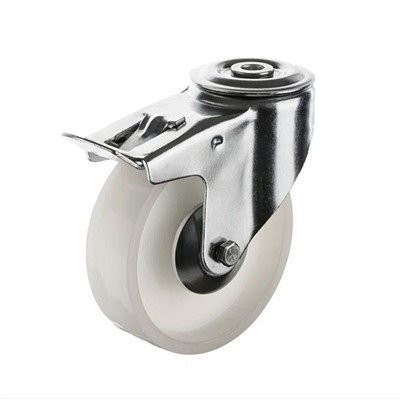
What Is Nylon Industrial Caster
A nylon industrial caster is a type of wheel that is designed for heavy-duty industrial applications. It is typically made from nylon to provide durability and strength. Nylon is known for its resistance to wear, chemicals, and impacts, making it ideal for use in industrial settings where there may be high loads, rough surfaces, or exposure to various chemicals.
Advantages of Nylon Industrial Caster
Durability
Nylon is a highly durable material that can withstand heavy loads and constant use. It is resistant to wear and tear, making it ideal for industrial environments where there may be rough or uneven surfaces.
Corrosion Resistance
Nylon is resistant to most chemicals, oils, and solvents, making it suitable for use in industries where these substances are present. It does not rust or corrode like metal casters, ensuring a longer lifespan.
Noise Reduction
Nylon casters are known for their quiet operation. They produce less noise compared to metal casters, making them ideal for applications that require a quiet working environment.
Non-Marking
Nylon casters are non-marking, meaning they do not leave scuff marks or damage floors. This is especially important in industries where protecting the flooring is essential, such as hospitals, hotels, or warehouses with polished floors.
Light Weight
Nylon is a lightweight material, which makes it easier to maneuver and transport heavy loads. This reduces the strain on workers and increases productivity.
Easy Maintenance
Nylon casters are relatively easy to clean and maintain. They do not require regular lubrication like metal casters, saving time and effort in maintenance.


Why Choose Us
Rich Experience
Our company has many years of production work experience. The concept of customer-oriented and win-win cooperation makes the company more mature and stronger.
Advanced Equipment
A machine, tool or instrument designed with advanced technology and functionality to perform highly specific tasks with greater precision, efficiency and reliability.
High Quality
Our products are manufactured or executed to very high standards, using the finest materials and manufacturing processes.
Competitive Price
We have professional sourcing team and cost accounting team, stive to reduce cost and profit and provide you a good price.
Sustainable Development
Establish a good reputation and brand value in the industry, and promote the sustainable, stable, rapid and healthy development of the enterprise.
One-stop Solution
With rich experience and one-to-one service,we can help you choose products and answer technical questions.
How To Reduce The Noise Of Nylon Industrial Casters
Reducing the noise of nylon industrial casters can be achieved through a variety of engineering strategies and maintenance practices. Here are some effective methods:
Lubrication
Regularly apply high-quality wheel bearing grease or special caster lubricant to the rotating parts and raceways of your casters. Proper lubrication reduces friction between moving parts, which are a significant source of noise.
Wheel Material
Make sure the nylon wheels are in good condition and have no cracks or damage. Worn or deformed wheels increase friction and vibration, resulting in higher noise levels.
Grinding Wheel Hardness
Use a grinding wheel with a Shore A hardness rating appropriate for the surface it will be operated on. Softer wheels make less noise on hard surfaces, while stiffer wheels are quieter on rough terrain.
Wheel Size
Larger wheels have lower ground pressure, roll smoother, and reduce noise. They also have a greater ability to climb over obstacles, reducing the need for rapid movements to produce sound.
Rotating Mechanism
Check whether the rotating mechanism is running smoothly. Loose or dirty swivel joints can seize and create additional noise. Keep swivel joints clean and well lubricated.
Installation Integrity
Make sure the casters are securely mounted to the equipment. Loose installation can cause vibration and noise. Tighten all hardware and check mounting components for gaps.
Floor Condition
Maintain the floor surface on which casters run. Uneven or dirty floors can cause wheels to jam or bounce, causing noise. Smooth, clean floors allow for smoother caster operation.
Speed Control
Reduces the movement speed of equipment equipped with casters. Higher speeds may result in increased noise because the wheels spin faster and impact the floor more.
Caster Design
If possible, choose a caster design with noise reduction features. Some manufacturers offer caster models designed with noise-reducing materials or special geometries to minimize sound.
The customization options for Nylon Industrial Casters may include the following:
Wheel Diameter: Nylon casters are available in various wheel diameters, such as 2 inches, 3 inches, 4 inches, 5 inches, etc. The diameter selection depends on the specific application and load requirements.
Load Capacity: Nylon casters come in different load capacities, ranging from light-duty to heavy-duty options. The load capacity can be customized according to the weight that needs to be supported.
Wheel Type: Nylon casters can have different wheel types, such as swivel, rigid, or brake casters. Swivel casters allow for 360-degree rotation, rigid casters only provide straight-line movement, and brake casters have a locking mechanism to prevent movement.
Mounting Type: Nylon casters can be customized with various mounting options, including plate mount, stem mount, or threaded stem mount. The mounting type selection depends on the specific application and installation requirements.
Bearing Type: Nylon casters can be equipped with different types of bearings, such as plain bearings, roller bearings, or ball bearings. The choice of bearing type depends on the desired smoothness of movement and load capacity.
Brake Options: If brake casters are chosen, different brake options can be customized, such as total lock brakes (locking both wheel rotation and swivel movement) or directional lock brakes (locking only the swivel movement).
Overall Height: The overall height of nylon casters can be customized to meet specific height requirements or to match the existing equipment.
Color: Nylon casters are available in various colors, allowing for customization to match the aesthetic requirements or corporate branding.
How To Reduce The Swivel Resistance Of Nylon Industrial Caster
There are several ways to reduce the swivel resistance of a nylon industrial caster:
Lubrication: Apply a lubricant, such as silicone spray or grease, to the swivel mechanism of the caster. This will reduce friction and allow for smoother swiveling.
Cleaning: Regularly clean the caster to remove any dirt, debris, or buildup that may be causing resistance. Use a mild detergent and water to clean the caster, and make sure to dry it thoroughly before use.
Check For Damage: Inspect the caster for any signs of wear or damage, such as bent or broken components. Replace any damaged parts to ensure smooth swiveling.
Adjust The Load: If the caster is carrying a heavy load, consider reducing the weight or redistributing the load to other casters. Excessive weight can cause increased resistance and make it more difficult for the caster to swivel.
Check The Floor Surface: Ensure that the floor surface is smooth and free from any obstacles or obstructions that may impede the swiveling motion of the caster. Uneven or rough surfaces can increase resistance.
Consider Upgrading The Caster: If the resistance is persistent and cannot be resolved with the above methods, it may be necessary to upgrade to a different type of caster that is better suited for the specific application or environment.
Installing nylon industrial casters involves several steps to ensure they are properly connected to the equipment and functioning properly. Here is a detailed guide on how to install nylon industrial casters:
Choosing The Right Casters: Determine the wheel size, load-bearing capacity and type (rigid or swivel) required for the application. Make sure the nylon wheels are suitable for the terrain and load.
Measure The Equipment: Measure the area on the equipment where the casters will be installed to ensure you are using the correct size and type of mounting plate or pole.
Choose a Mounting Method: Common mounting methods include top plate, bottom plate, stem, kingpin or four-bolt flange. Choose a method that matches the existing structure on the device.
Prepare The Mounting Surface: Clean the caster mounting area to remove any dirt, debris, or rust. This ensures a secure fit and helps prevent future problems.
Attaching The Mounting Plate Or Pole:
‣If using a top or bottom plate, align the plate with the mounting area and secure it with screws or bolts following the pattern recommended by the caster manufacturer.
‣For riser installation, insert the riser into the hole in the unit and slide the wheel onto the riser until it seats properly. Secure the wheels with lock nuts or washers.
‣For king pin or four-bolt flange mounts, align the casters with the holes in the unit and bolt them in place. Tighten the bolts evenly to avoid misalignment.
Check Alignment: After installation, check that the casters are properly aligned. The wheels should roll freely and straight without wobbling or going off course. Misalignment can cause excessive wear on the casters and equipment.
Test The Casters: Load the equipment with the expected weight and test the casters to make sure they roll smoothly and support the load without any issues.
Adjust If Necessary: If the caster is not performing as expected, loosen the bolts and adjust the position slightly. Retighten the bolts and test again.
Regular Maintenance: Check casters regularly for signs of wear or damage and perform maintenance as needed, including cleaning, lubricating and replacing worn parts.
How To Improve The Impact Resistance Of Nylon Industrial Caster
There Are Several Ways To Improve The Impact Resistance Of a Nylon Industrial Caster:
Increase The Material Thickness
Opt for a thicker nylon material for the caster wheel. This will increase the overall strength and impact resistance of the caster.
Reinforce The Structure
Add reinforcement ribs or supports to the design of the caster wheel. This will help distribute the impact forces more evenly and prevent the wheel from cracking or breaking under heavy loads.
Use a Higher Grade Of Nylon
Different grades of nylon have different mechanical properties. Consider using a higher grade of nylon that offers improved impact resistance. This may come at a higher cost, but it will provide better durability and longevity.
Add a Shock-Absorbing Mechanism
Incorporate a shock-absorbing mechanism into the design of the caster. This could be in the form of a cushioning material or a spring system that absorbs the impact forces and reduces the stress on the caster wheel.
Test And Evaluate
Conduct thorough testing and evaluation of the caster under different impact conditions to identify any weak points or areas that require improvement. Use this feedback to make necessary modifications and enhancements to the design.
Regular Maintenance And Inspection
Implement a regular maintenance and inspection schedule to identify any signs of wear and tear or damage. Promptly replace any damaged or worn-out caster wheels to maintain the overall impact resistance of the equipment.
Nylon, particularly nylon 6 and nylon 6/6, is known for its excellent chemical resistance compared to many other polymers. Its resistance to various chemicals makes it suitable for use in environments where contact with corrosive substances is common. Here's a breakdown of the typical chemical resistance of nylon industrial casters:
Alkalis: Nylon has good resistance to alkaline substances, including mild solutions of sodium hydroxide (NaOH) and potassium hydroxide (KOH). It can withstand exposure to detergents and cleaning agents that contain alkalis.
Acids: Nylon exhibits moderate resistance to acids. It can resist dilute concentrations of sulfuric acid (H2SO4), hydrochloric acid (HCl), and nitric acid (HNO3) at room temperature. However, strong acids and concentrated solutions can degrade nylon over time.
Solvents: Nylon has poor resistance to aromatic and chlorinated hydrocarbons, such as benzene and trichloroethylene. It can be swollen or dissolved by these solvents. However, it is resistant to aliphatic hydrocarbons like gasoline and kerosene.
Hydrocarbons: Nylon is resistant to most non-polar hydrocarbons, making it suitable for use in environments where oils and fuels are present.
Salts And Inorganic Chemicals: Nylon shows good resistance to salts and most inorganic compounds, which makes it suitable for use in marine and industrial applications.
Water And Moisture: Nylon has good resistance to moisture and water absorption, which contributes to its dimensional stability in wet environments.

How To Ensure The Quality Of Nylon Industrial Caster
To ensure the quality of Nylon Industrial Casters, follow these steps:
Material Quality
Nylon casters should be made from high-quality, durable nylon material. Ensure that the manufacturer uses premium-grade nylon that can withstand heavy loads, wear and tear, and various environmental conditions.
load capacity
Determine the load capacity requirement for your specific application. Check if the manufacturer provides load capacity specifications for their casters. Make sure the casters are designed to handle the intended weight without compromising performance or safety.
Design And Construction
Consider the design and construction of the nylon casters. Look for features like double ball bearings, reinforced frames, and precision machining for smooth rolling, stability, and longevity. The caster should also have a strong mounting plate or stem to securely attach it to the equipment.
Testing And Certifications
Ensure that the nylon casters undergo thorough testing to meet industry standards and certifications. Look for certifications like ISO 9001, which indicate that the manufacturer has implemented a quality management system.
Warranty And Support
Check if the manufacturer offers a warranty for their nylon casters. A warranty demonstrates the manufacturer's confidence in their product's quality. Additionally, ensure that the manufacturer provides reliable customer support to address any issues or concerns that may arise.
Compliance With Safety Standards
Ensure that the nylon casters comply with relevant safety standards and regulations, such as ANSI/BIFMA or EN standards. This ensures that the casters have been tested for safety and performance.
How Does The Load Capacity Of Nylon Industrial Caster Be Affected
The load capacity of a Nylon Industrial Caster can be affected by several factors, including:
Material And Construction
The load capacity of a caster is largely determined by the material used in its construction. Nylon casters are typically designed to handle medium to heavy loads. The specific type and grade of nylon used can also impact the load capacity.
Wheel Diameter And Width
The size of the caster wheel can affect the load capacity. Generally, larger diameter and wider wheels have higher load capacities as they distribute the weight over a larger surface area.
Bearing Type
The type of bearing used in the caster can also impact the load capacity. Roller bearings or ball bearings are commonly used in nylon casters and can provide higher load capacities compared to plain bearings.
Mounting Type
The way the caster is mounted to the equipment or structure can affect its load capacity. Different mounting types, such as plate mount or stem mount, have different load capacities and weight distribution characteristics.
Operating Conditions
The load capacity of a nylon caster can be influenced by the operating conditions it is subjected to. Factors such as temperature, speed, and the presence of chemicals or moisture can affect the strength and durability of the caster, potentially reducing its load capacity.
What Are The Quality Standards For Nylon Industrial Caster
The quality standards for Nylon Industrial Casters can vary depending on the specific industry and application. However, some common quality standards for these casters may include:
Load Capacity
Nylon industrial casters should be able to withstand and carry the specified load capacity without failure or deformation. The load capacity should be tested and certified according to relevant standards.
Durability
The casters should be durable and able to withstand continuous use in industrial environments. They should resist wear, corrosion, and damage caused by chemicals, oils, or extreme temperatures.
Smooth Operation
The casters should provide smooth and quiet operation, ensuring easy movement of the equipment or machinery they are attached to. They should have low rolling resistance for efficient and effortless mobility.
Wheel Material
The nylon wheels should be made from high-quality, impact-resistant nylon material that is capable of withstanding heavy loads and rough surfaces. The material should be tested for its mechanical properties and resistance to wear and tear.
Swivel Mechanism
The swivel mechanism should allow for easy maneuverability and smooth rotation, ensuring that the casters can turn and change direction smoothly without any friction or binding.
Braking System
If the casters have a braking system, it should be reliable and capable of securely locking the wheels to prevent unintended movement. The brakes should be tested to ensure their effectiveness and durability.
Safety Standards
The casters should comply with relevant safety standards and regulations, including load capacity safety factors, noise emission limits, and ergonomic considerations.
How To Choose Nylon Industrial Caster With Cost-Effective
Choosing a cost-effective nylon industrial caster involves balancing initial investment with long-term performance and maintenance costs. Here are steps to guide you through the selection process:
Load Requirements
Determine the maximum load capacity needed for your application. Select a caster that can handle the heaviest load you expect, with a safety margin of at least 25%. Overloading a caster can lead to premature failure and increased costs.
Floor Surfaces
Assess the type of flooring where the caster will be used. Different floor surfaces may require different wheel types to maximize performance and prevent damage. For example, softer wheels are better on polished concrete, while harder wheels work well on rougher surfaces.
Mobility Needs
Consider how often the caster will need to change direction and whether it will be used manually or with motorized equipment. Swivel casters allow for easier maneuverability, but they may cost more than fixed casters.
Caster Size
Larger wheels can handle heavier loads and rougher terrain but are typically more expensive. Choose the smallest wheel diameter that meets your load and mobility needs to keep costs down.
Material And Construction
While nylon is a durable material, the construction quality of the caster components can vary. Look for casters with high-quality bearings, brackets, and fasteners to ensure reliability without unnecessary expense.
Chemical Resistance
If the caster will be exposed to chemicals, ensure the nylon material is compatible with those substances. The added cost of chemically resistant casters is justified if it prevents premature degradation.
Maintenance Considerations
Opt for casters that require minimal maintenance to reduce long-term costs. Self-lubricating wheels can save on maintenance time and costs.
Warranty And Support
Consider the warranty offered by the manufacturer. A longer warranty period may indicate higher confidence in the product's durability, potentially justifying a higher upfront cost.
Our Factory
As a professional manufacturer, UNIONLEVER makes various specifications of the range of industrial castors, casting products, elector-plating products, industrial small handcart, sheet metal stamping, injection molding, PU founding and other products. We have 1 set of automatic foundry production line, 2 of advanced PU wheel casting production line, 5 of semi automatic vehicle processing equipment imported from Japan, 8 of semi automatic lathe in the vehicle processing workshop, 4 set of full automatic advanced molding machine.

FAQ
Hot Tags: nylon industrial caster, China nylon industrial caster manufacturers, suppliers, factory, steel casters with brakes, spring loaded wheel casters, airport luggage trolley, adjustable scaffold caster wheels, heavy duty metal caster wheels, industrial caster wheels for furniture